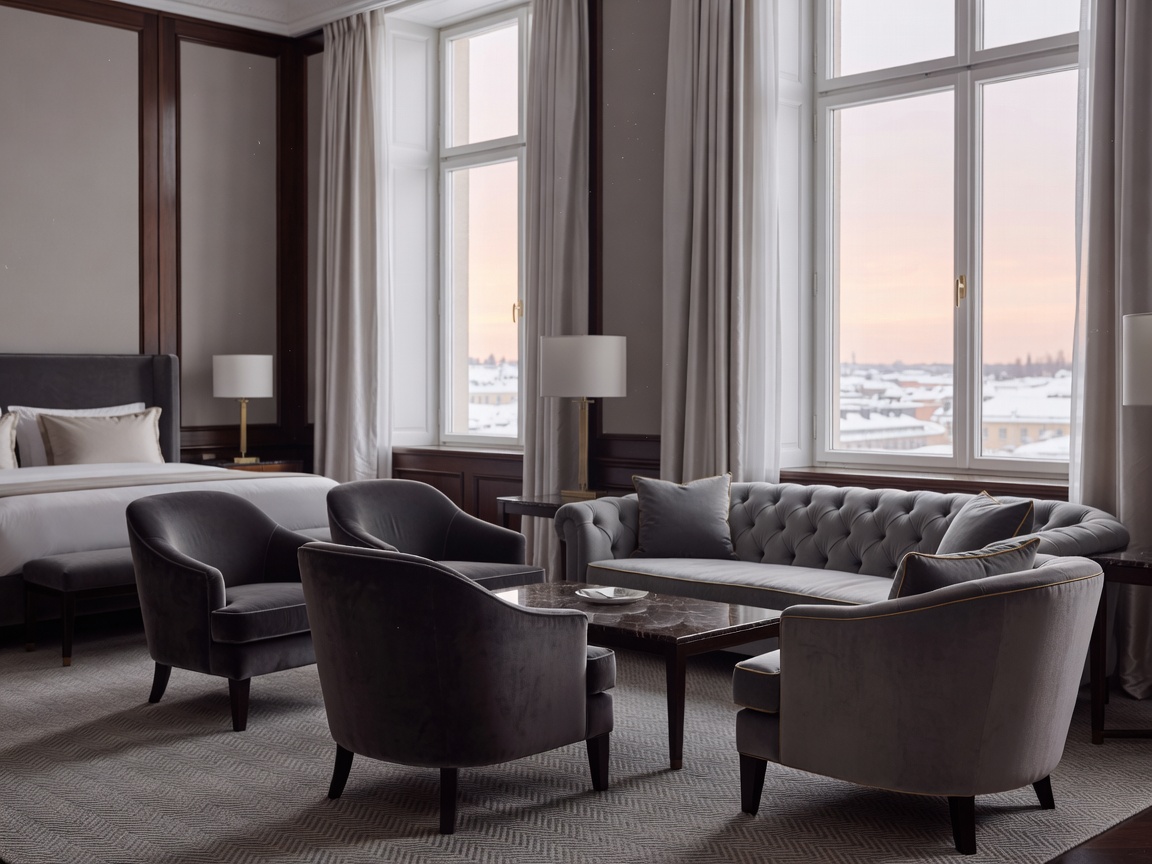
Waldorf Astoria is Hilton's flagship luxury brand, carrying a name that began with the original hotel on New York's Park Avenue. Its Helsinki property places that heritage inside a historic building in the Finnish capital's centre, and the result is an interesting meeting of two service philosophies: international brand standards and Nordic understatement.
What the brand brings
Across the Waldorf Astoria portfolio, the defining service element is the Personal Concierge: a named point of contact who corresponds with guests before arrival and remains available through the stay. In practice this means one person, rather than a rotating desk, holds the context of your trip. For travellers who dislike repeating themselves, this continuity is the main reason to choose the brand.
The brand also carries recognisable design and hospitality signatures, including the Peacock Alley lounge concept drawn from its New York origins. How each signature is interpreted varies by property, so treat these as brand traditions rather than guaranteed features, and check the hotel's current outlets on Hilton's official channels before arrival.
Personalized Service in practice
A Personal Concierge model is only as good as the information you give it. Useful things to share in pre-arrival correspondence include:
- Arrival time and flight details, so transfer and early check-in options can be explored.
- The tone of the trip: business, anniversary, family, or a slow cultural break.
- Dining preferences and any allergies, which matter for restaurant bookings across the city.
- Interests that suggest specific experiences, such as Finnish architecture, design shopping or sauna culture.
In Helsinki, strong concierge planning often connects the hotel to the city's compact geography: a morning at the Ateneum art museum, lunch near the Old Market Hall, an afternoon at a public sauna on the waterfront, and an evening reservation within walking distance. The value is in sequencing rather than spectacle.
Rooms and setting
Room categories at Waldorf Astoria properties generally progress from standard luxury rooms to suites with separate living areas. Within a historic Helsinki building, expect variation in room shape, ceiling height and outlook between rooms in the same category. If light matters during the darker months, ask about window orientation; it makes a real difference to how a room feels between November and February.
Strengths and trade-offs
Strengths
- Personal Concierge offers continuity across the stay.
- Predictable international luxury standards.
- Hilton Honors earning and redemption.
- Central location within walking distance of key sights.
Trade-offs
- Brand standards may feel less distinctly Finnish than independent hotels.
- Historic building means irregular room layouts.
- Outlets and signatures can change; verify before relying on them.
- Premium positioning within the Helsinki market.
How it compares
| Factor | Waldorf Astoria | Hotel Kämp | Hotel U14 |
|---|---|---|---|
| Contact model | Named Personal Concierge | Lobby concierge desk | Front desk team |
| Identity | Global brand heritage | Local grand-hotel history | Contemporary boutique |
| Best for | Frequent luxury travellers | Heritage enthusiasts | Design-minded short stays |
Practical notes
The commuter train from Helsinki Airport reaches Central Station in roughly half an hour, and the city centre is compact enough to walk. Trams cover most cultural districts. Summer brings long evenings and terrace life; winter brings early darkness, Christmas markets and a strong indoor culture of museums, concerts and saunas.
For rates and the latest information, consult Hilton's official website. For broader trip planning, MyHelsinki, the city's official visitor site, is a dependable resource.